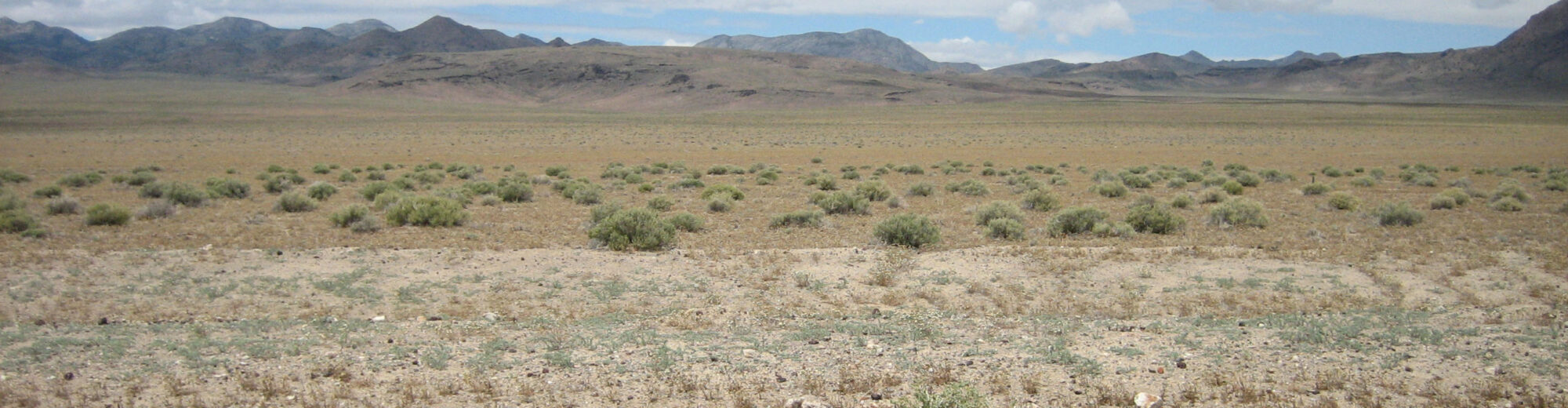
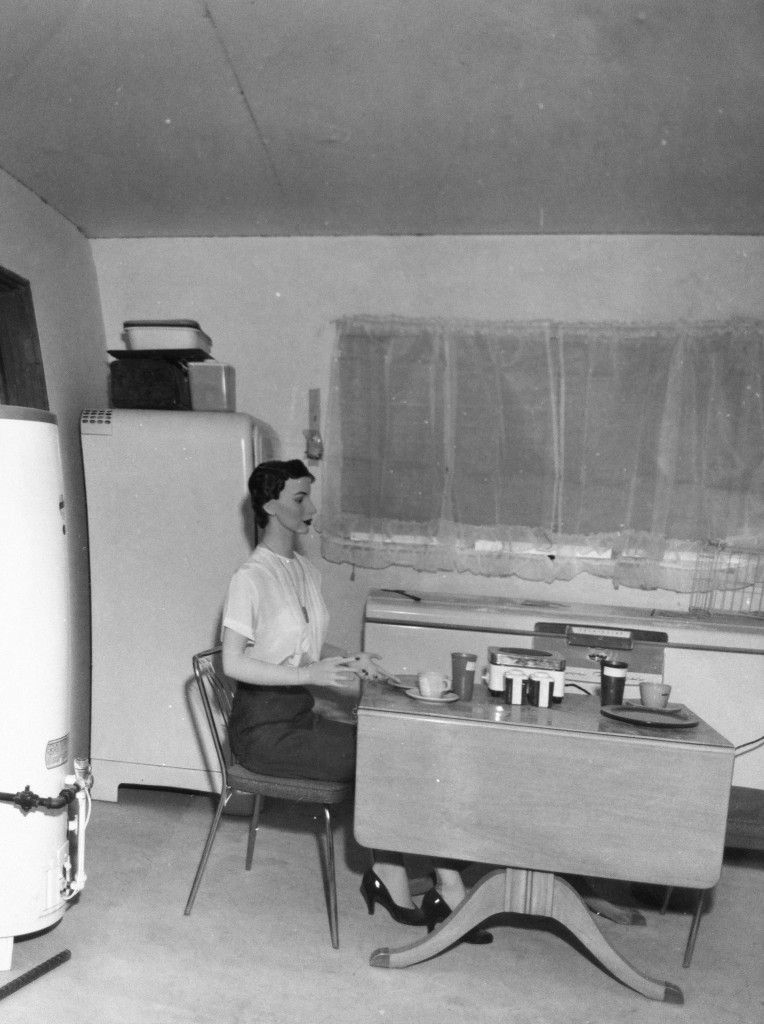
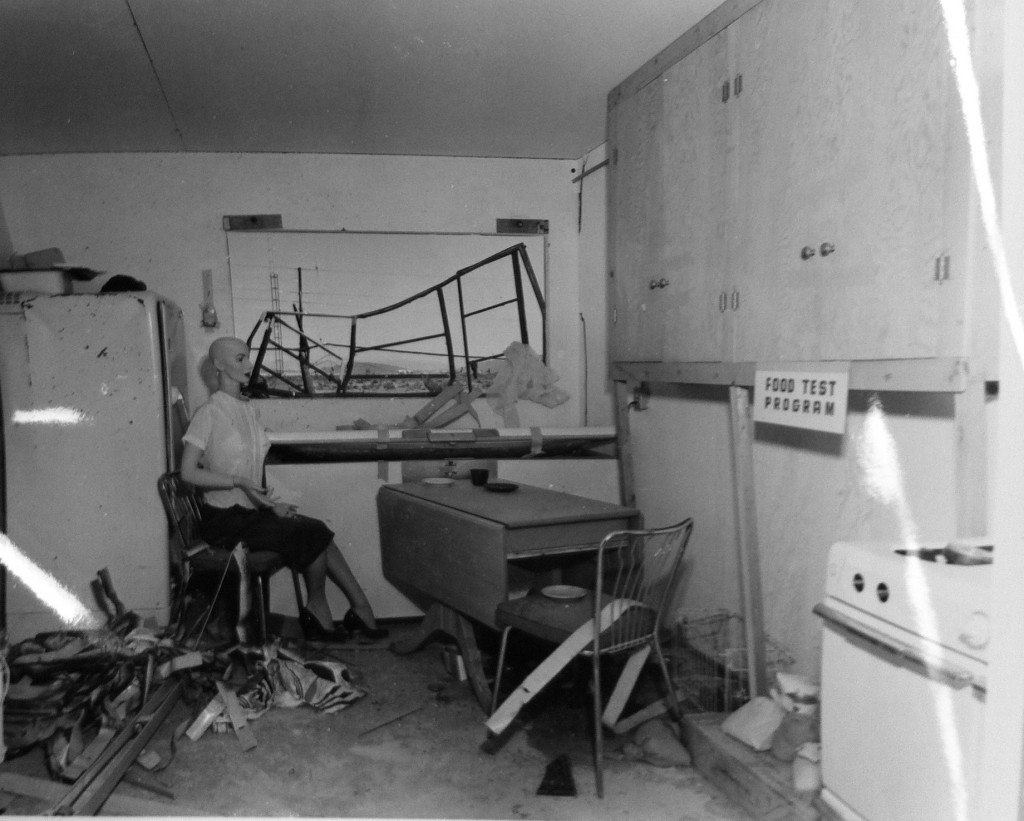
I returned to my image research, writing, mapping, and art making connected to the Nevada Test Site and the LA Darling mannequins (several photos posted in earlier posts). The LA Darling display mannequins were used in the 1953 and 1955 civil defense nuclear detonation operations at Yucca Flat. I have experimented with some of the imagery over the years and my goal now is to visualize and reflect on the presence, outfitting, damage, and representation / identity of each mannequin used in the detonations, and their connection and contrast to nuclear violence and the concerns in the world of actual people, places, and environments. I am researching the use of these images of before-and-after-detonation-captured bodies and scenarios in the publications and exhibitions of the time, and am thinking about who and what is missing, and asking why. I am interested in protests and resistance to the civil defense stylizations and alert exercises, and what images of these operations mean now.
The images of male, female, adult, and child white display mannequins arranged in suburban-style heteronormative family scenes inside brick and frame houses built at the Nevada Test Site were used in materials to promote preparedness for nuclear disaster. The static mannequins express by proxy an acceptance to nuclear probability, nuclear survival, and a conformist attitude in the society.
I am interested in confronting the racial and socio-economic identities and environmental tensions in these images. I am interested in the textiles, objects, and bodily forms—described in text captions in JC Penney advertisements—and the types of fashions they selected. In analyzing these representations, I am noting what is missing and what disappeared. I reflect on dynamics of more-than-human lifeworlds, the absurdity, the violence, and the grotesque in these images, and what it says about who was these programs and the intended audiences.
I spent the last few weeks researching heavily into the image system relationships and histories of government archives and commercial stock photography collections and technologies. Photographers from both the Associated Press and International News Photo (the latter now part of Getty Images) were at the Nevada Test Site and documented some of these scenes. The photos were shared via Wirephoto or Soundphoto technologies, respectively, which are early forms of a faxed image. In the 1990s my friend and I would exchange faxes daily so this was personally interesting to me. As a young adult, I worked at The Image Bank, a stock photography company (now part of Getty Images), and I am interested in the relationships of images to publics, the material trace of original photo negatives and retouched photo prints, the network of how images are created and licensed for use in editorial works, and how this creates a mainstream distribution and an ubiquity of images which maintains a general narrative. Commercial stock and museum collections both have some of the Nevada Test Site mannequin images in their holdings. I have found a few examples of similar counterpart images in the National Archives—in which some of the exact same moments of the mannequins at the Nevada Test Site are photographed (at slightly different angles) by government employees—like the Signal Corps and the Lookout Mountain Lab.
Image: INP Soundphoto logo pictured below in a screenshot of the backside of a photograph, shown here for the logomark only:

Image: (above) A screenshot of the National Archives catalog. There are some digitized images available online. (below) Two separate images of before and after scenes from detonation Apple in 1955 File prints, courtesy of National Archives.

When I am browsing the National Archives online catalog searching for Nevada Test Site images of the 1950s—I also search through the scans of the shelflist log cards for that time period. The cards are type-written textual descriptions of the photos taken, and the photos may or may not be in the Archives’ holdings. It’s a vague experience, because many locations are grouped together—so I “traveled” via these text cards to a wide array of US government activities being photographed across the world: Japan, Korea, Vietnam, Nevada, Arkansas, California, Germany, etc. Below is an example card about silk weaving in Japan.
Image: National Archives Catalog, Shelflist to U.S. Army Signal Corps Black-and-White Photographs, 111-SCX-435000-thru-435999_0940
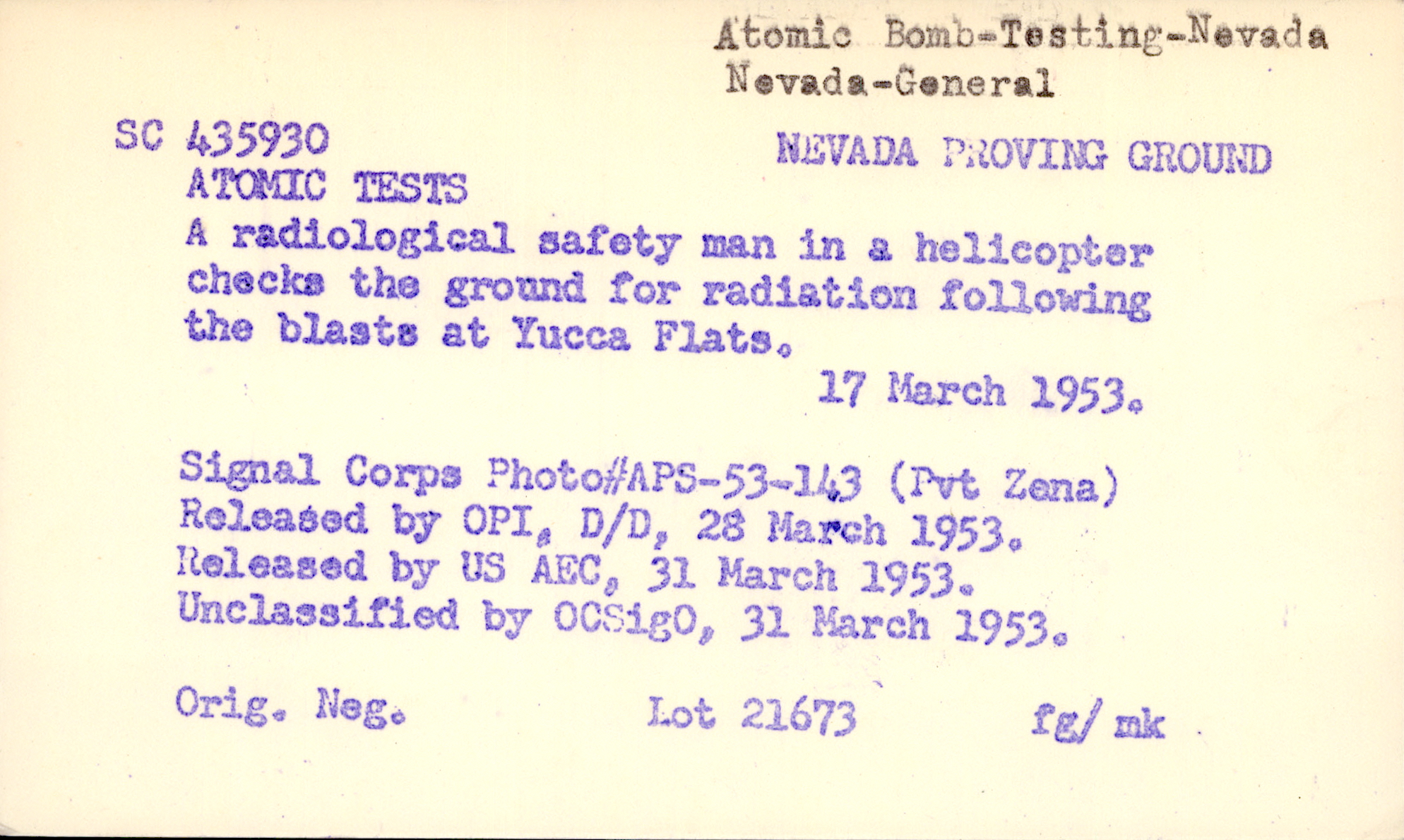
Image: National Archives Catalog, Shelflist to U.S. Army Signal Corps Black-and-White Photographs, 111-SCX-435000-thru-435999_0948. 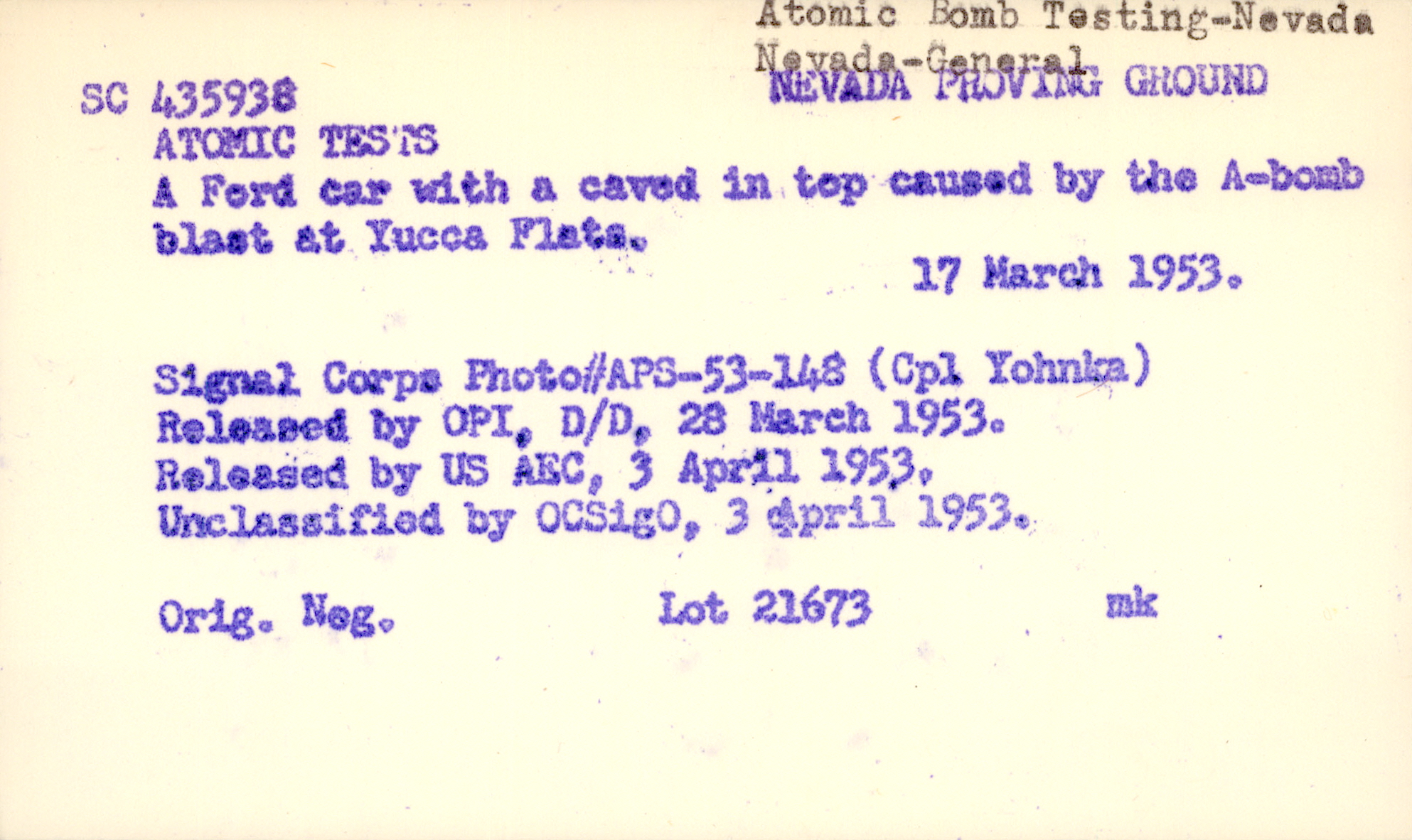
Image: National Archives Catalog, Shelflist to U.S. Army Signal Corps Black-and-White Photographs, 111-CX-05-0696
Below are three articles / books I read recently. I am grateful for the important perspectives and research in them; they articulate well the problems I feel when confronting these images and histories. I will continue to consult these and also am reading the books and articles these authors refer to—and will share thoughts in future posts:
- Hamilton, Kevin, and Ned O’Gorman. Lookout America! the Secret Hollywood Studio at the Heart of the Cold War. Hanover, New Hampshire: Dartmouth College Press, 2019. lookoutamerica.org
- Wake, Naoko. “Survivors of Hiroshima and Nagasaki in the Americas,” Organization of American Historians Journal,
- Wolcott, Victoria W. “Blowing Up Operation Alert: The Protests that Pierced a National Myth,” Organization of American Historians Journal, J
I wish to thank the University of North Carolina Greensboro for granting me a research leave this year to focus on my creative research. I am working on an artist book to bring the materials, expressions, and thoughts connected to The Evolution of Silence project into printed form. More details to come.