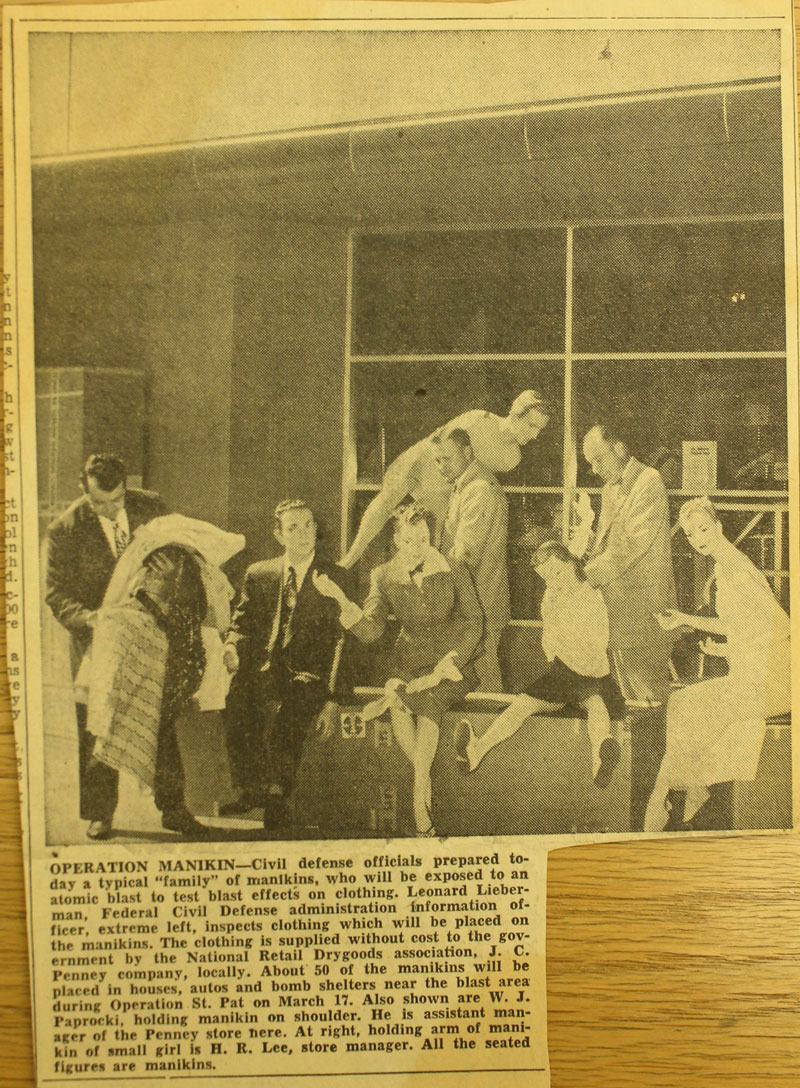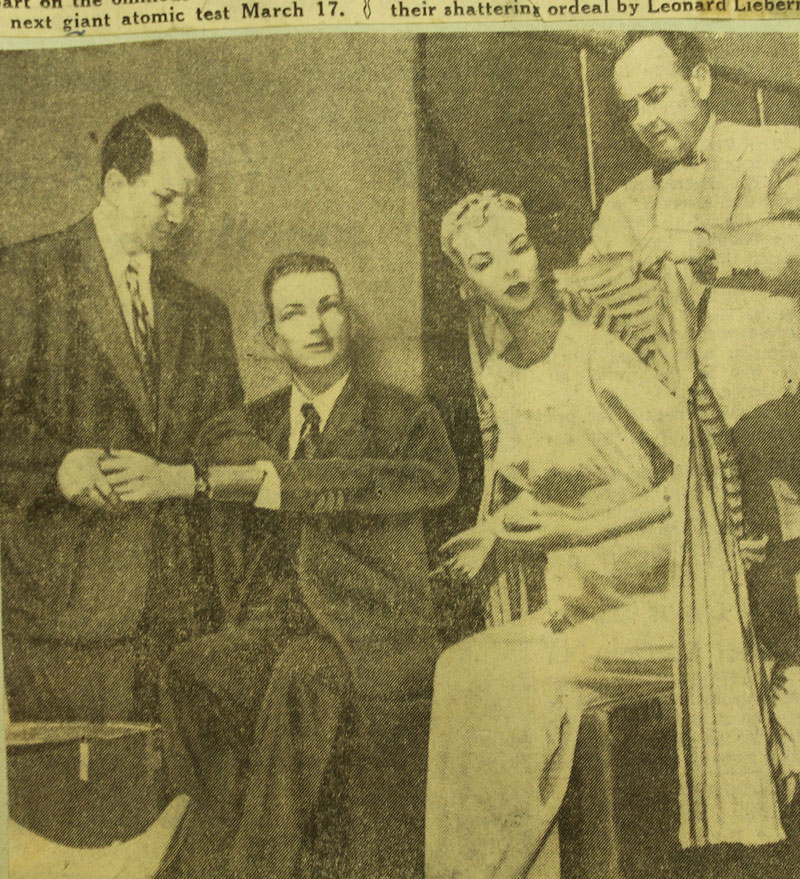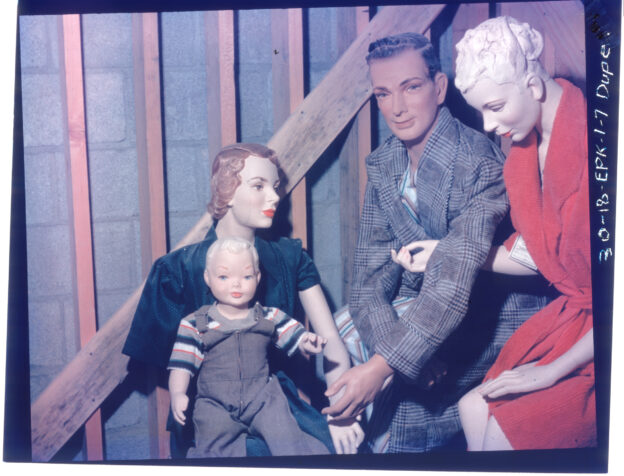
I am writing to highlight more images from my recent research visit to the National Archives (Still Photographs Division in College Park, MD), and to connect these findings with new ideas on textiles and visual research.
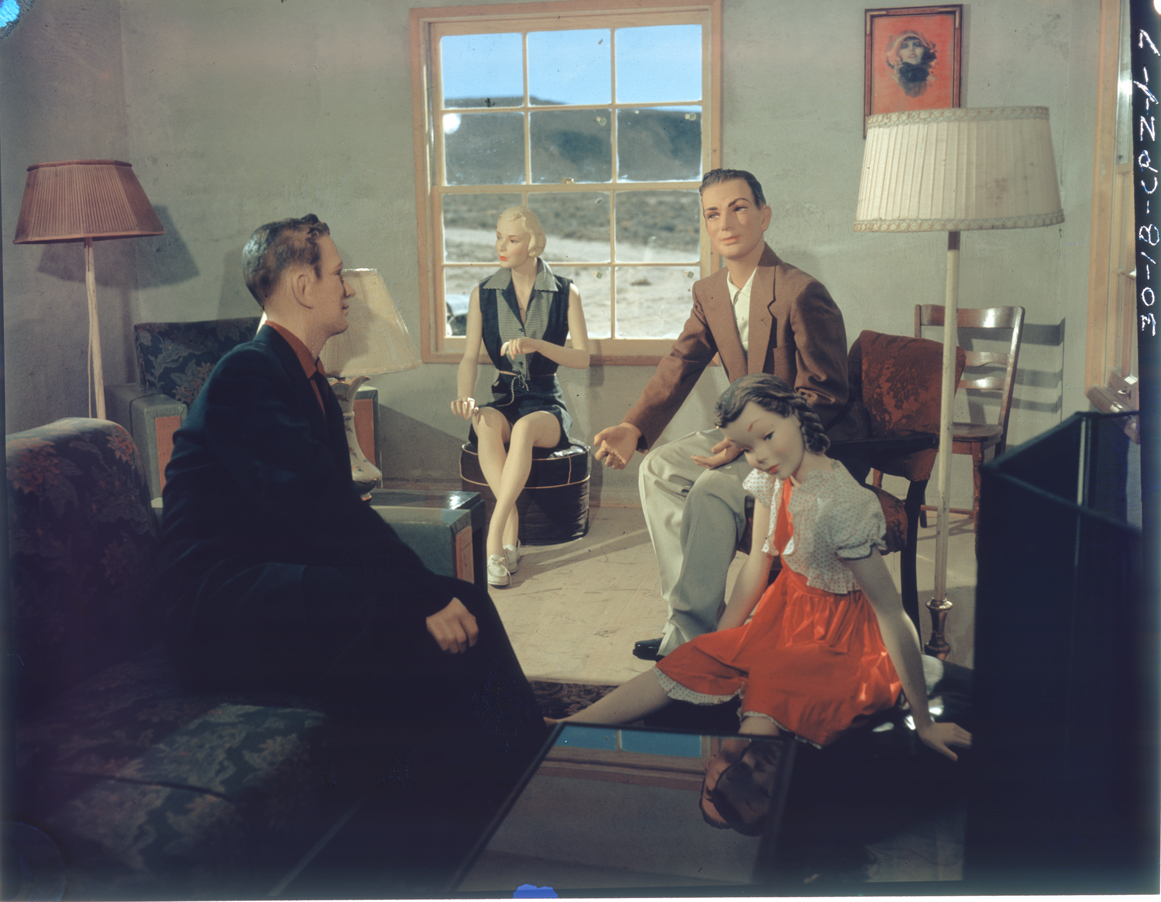
I am always pleased to see documentation in color, since most of what is printed, published, and distributed are black and white reproductions of the mannequins.I have found color transparencies of both Annie and Apple-2 mannequins at the National Archives (NARA) in College Park, MD. For the Annie detonation (March 17, 1953) the color transparencies show a group of mannequins in Las Vegas before being brought to the Nevada Test Site, a selection of “before” images of domestic tableaus and interiors, and a selection of “after” images (i.e. “after the detonation”). For the Apple-2 detonation (April 5, 1955) the 35-mm color transparencies depict “before” and “after” the detonation and document the installation.
Selection of the 4x5in color transparencies of Annie (images courtesy of NARA College Park: RG_304-NT-CT-Box1):
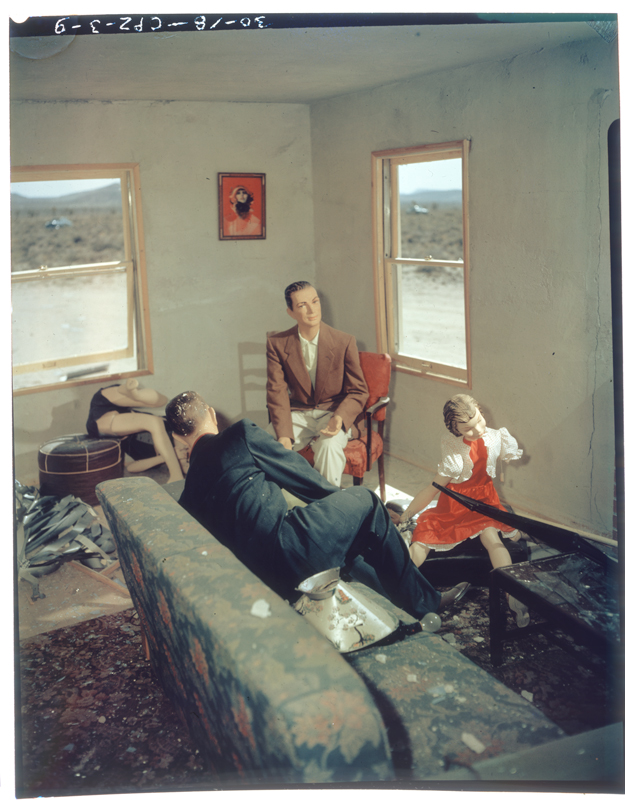
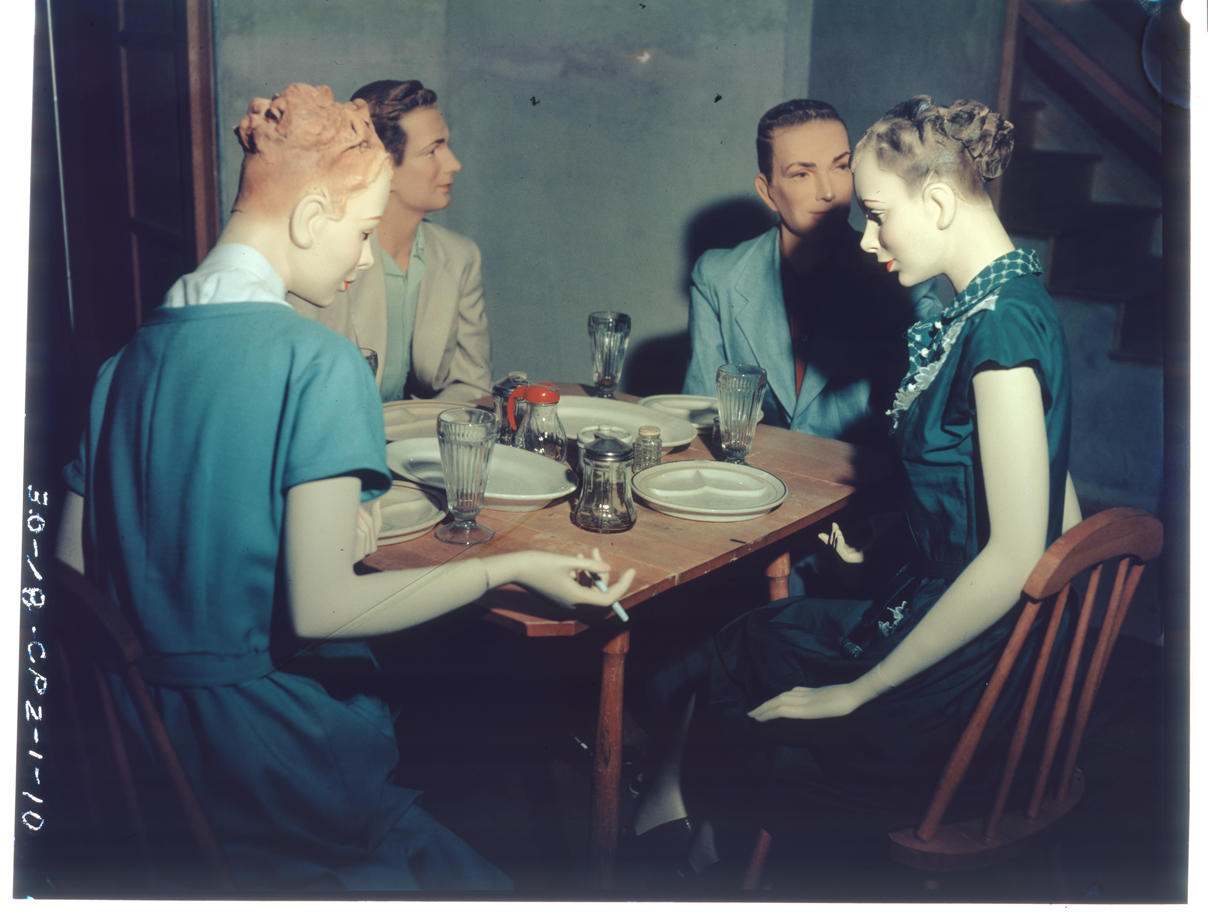
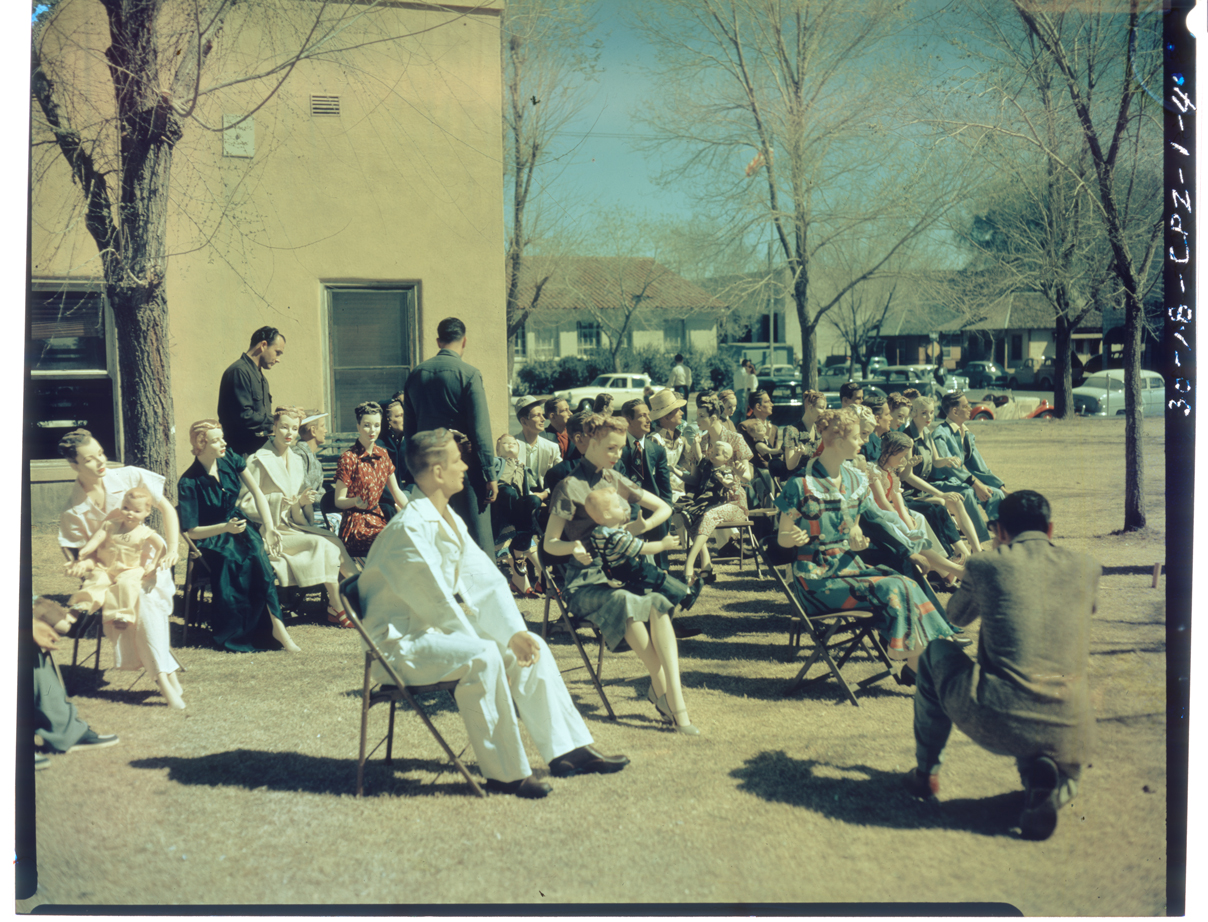
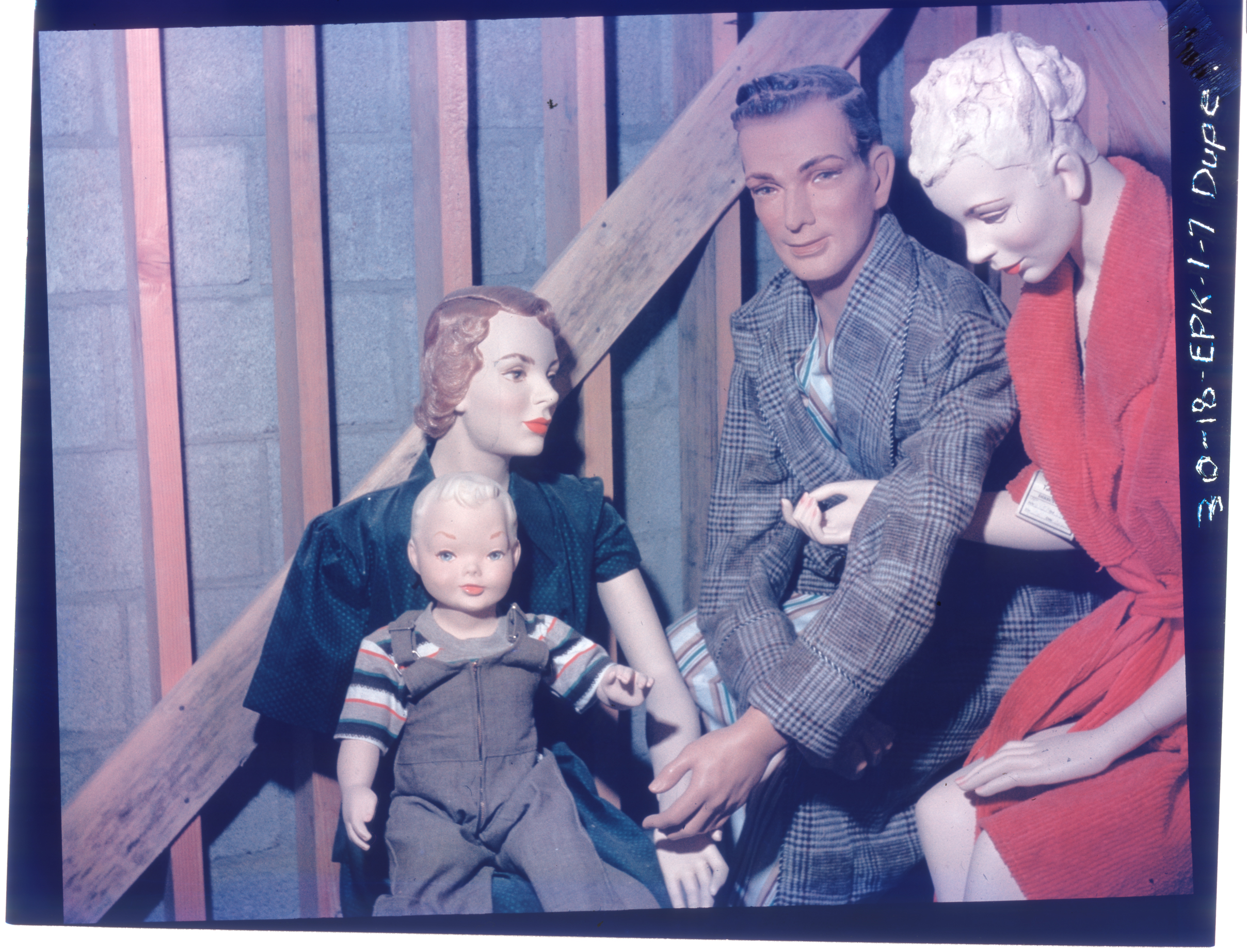
Selection of 35-mm color transparencies for Apple-2 (images courtesy of NARA College Park: RG-396-S):
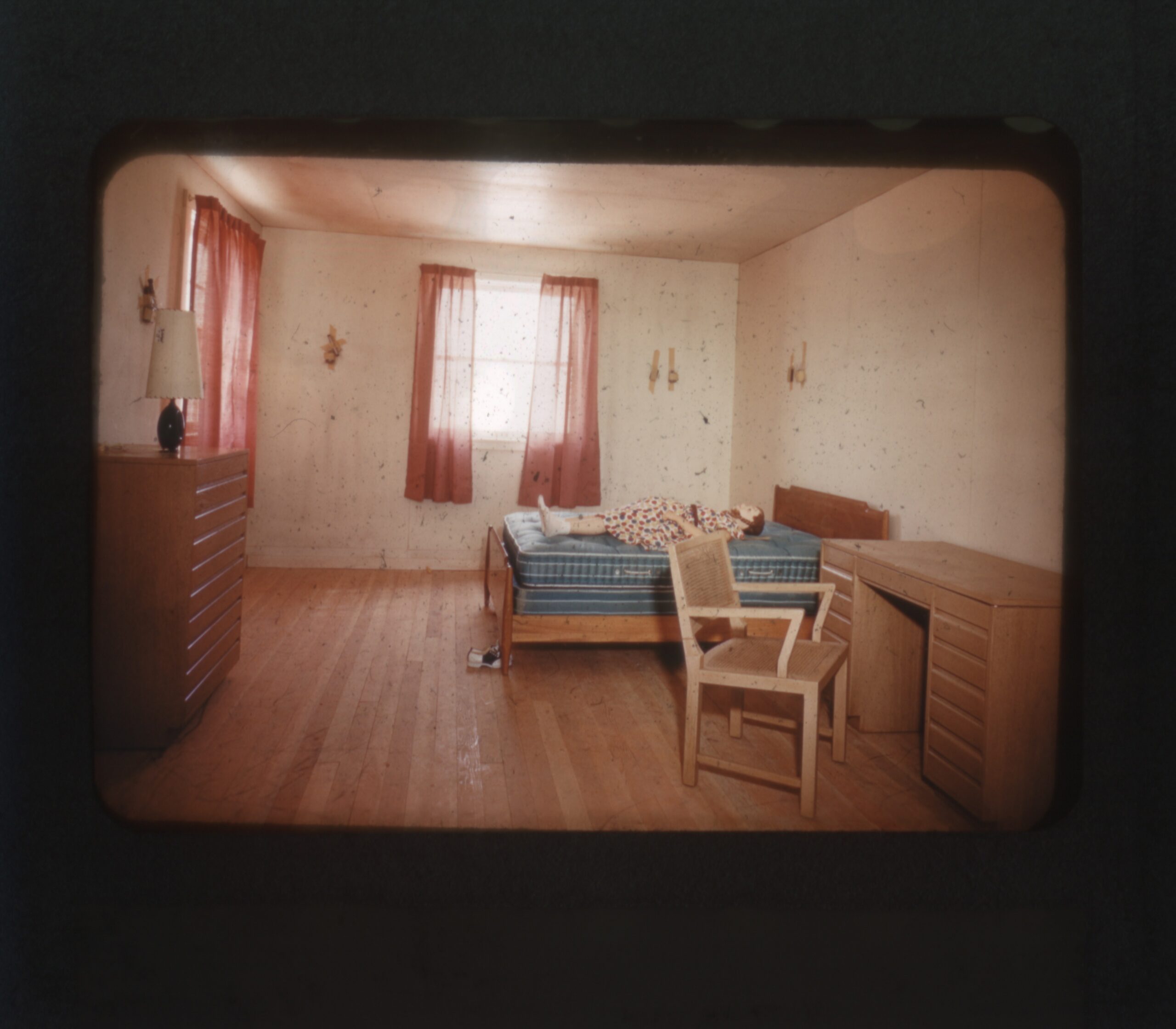
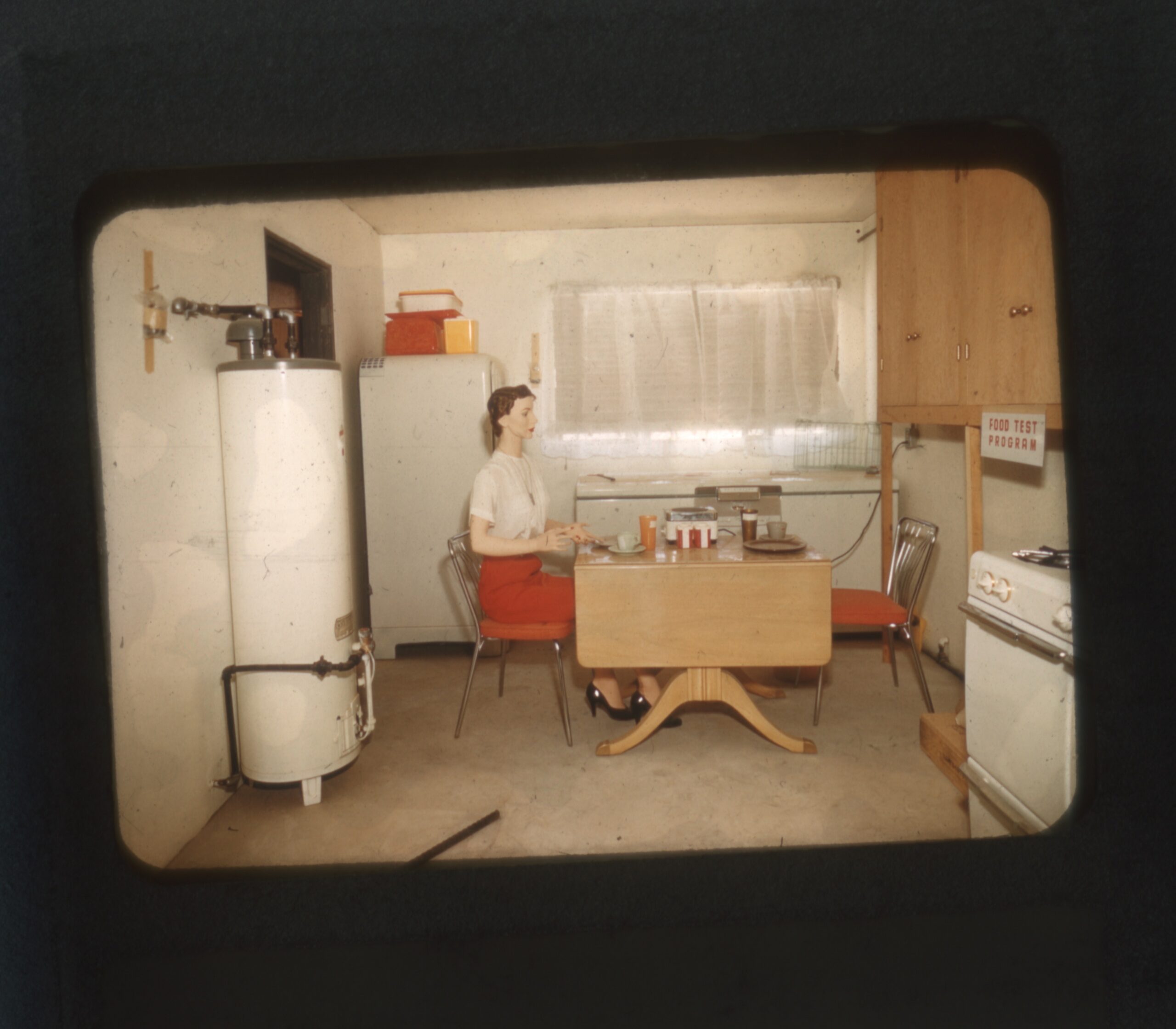
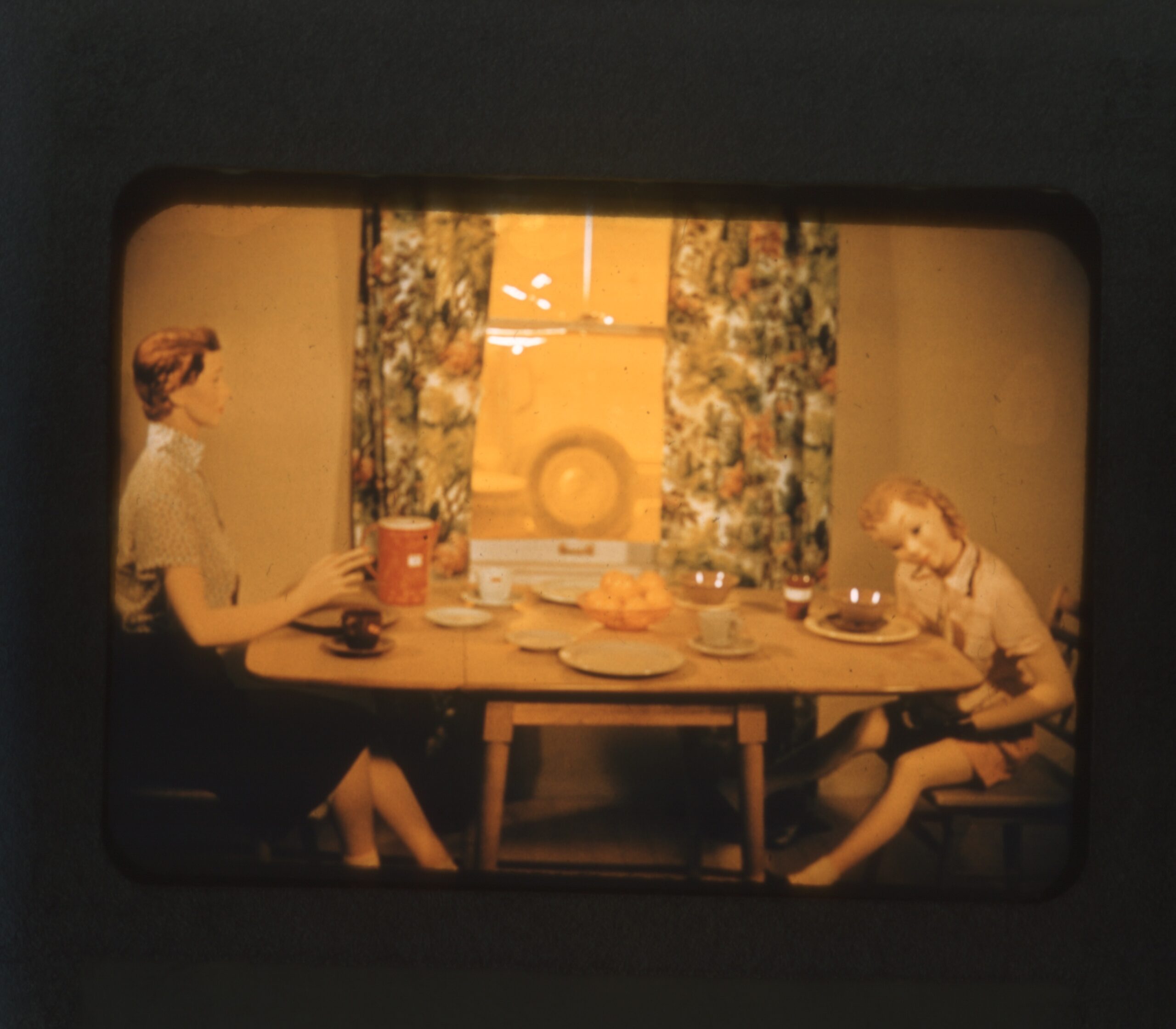
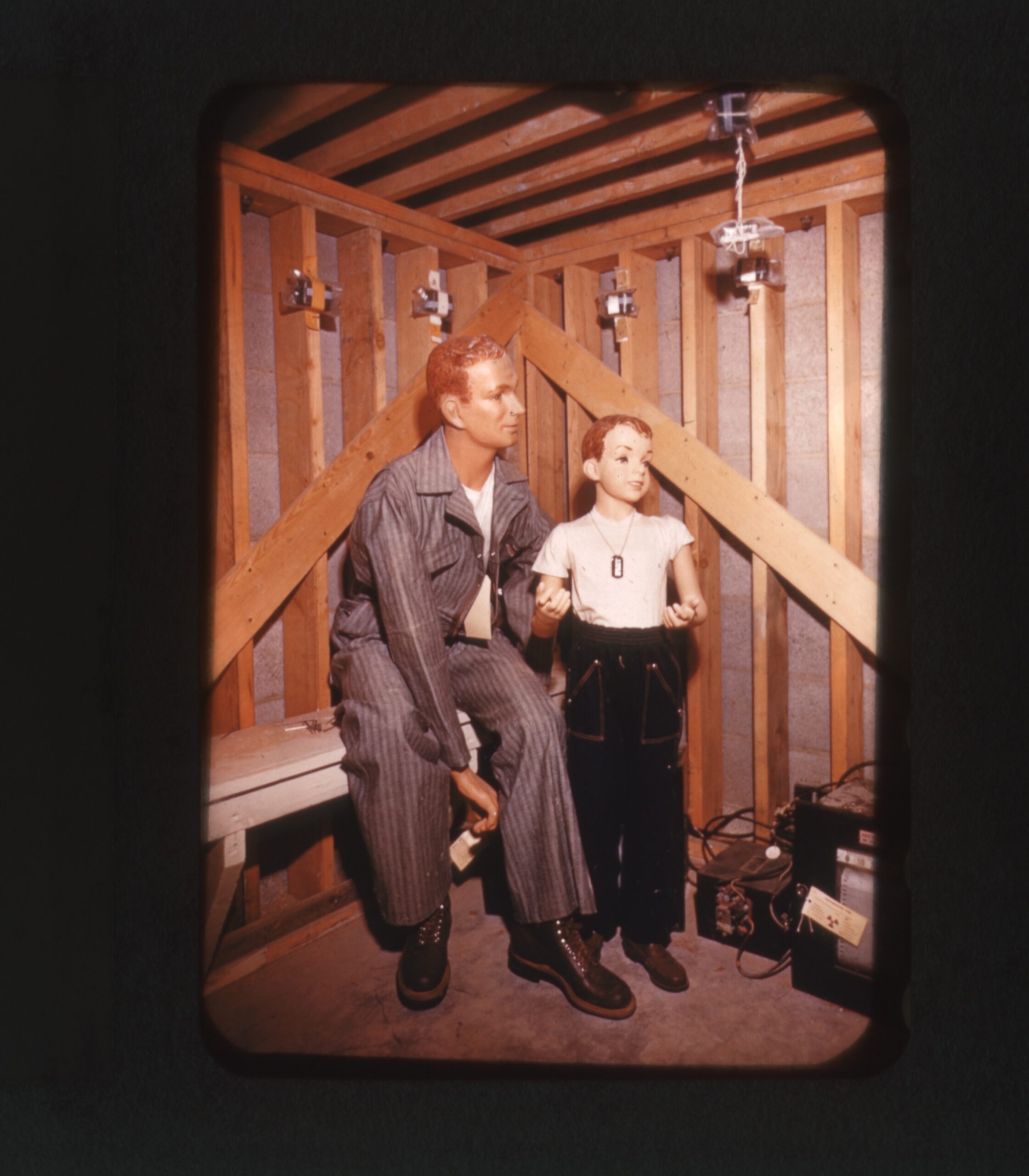
While attending artist/scholar talks at the secac conference a couple weeks ago I was inspired by the contemporary art practices and research shared—especially experimental weaving technologies and art works which transform familiar understandings of the body, surfaces, textiles and their structures through an influx of different sensory data flows and friction. In particular the conference energized my interests in researching the physical material histories of the mannequins of the Nevada Test Site.
I am curious about the L.A. Darling Co. mannequin bodies. I believe the 1953 mannequins are shaped from plaster and fabric, though they are sometimes described (mistakenly?) as made of plastic and wax, and some of the 1955 mannequins wear wigs. Also I am curious about the 1953 J.C. Penney clothing’s natural and synthetic materials: wool, fleece, cotton, nylon, rayon, acetate, leather, suede, rubber; the fabrics: satin, denim, broadcloth, chambray, batiste, seersucker, basket-weave, gabardine, knit, felt, mesh, crêpe, sheer, chenille; and by extension the materials used in the specially-built houses at the Nevada Test Site: brick, wood, mirror, glass, ceramic, metal, plastic, etc.
The Annie clothing is described in the 1953 J.C. Penney ad from the Las Vegas Review Journal and some colors are described as well, but not always. The images that I found at NARA provide more information and feeling. The Apple-2 mannequins were not similarly featured in an ad (to my knowledge) nor described in the same discursive manner, and so I am curious about their situation—was Apple-2 handled differently (two years later) by the Federal Civil Defense Administration—were L.A. Darling Co and J.C. Penney involved again? The outfits for the 1953 Annie detonation were selected from the downtown Las Vegas branch of J.C. Penney and below are 2 photos of the mannequins being dressed by executives out front. For more: see my earlier post on Annie mannequins.