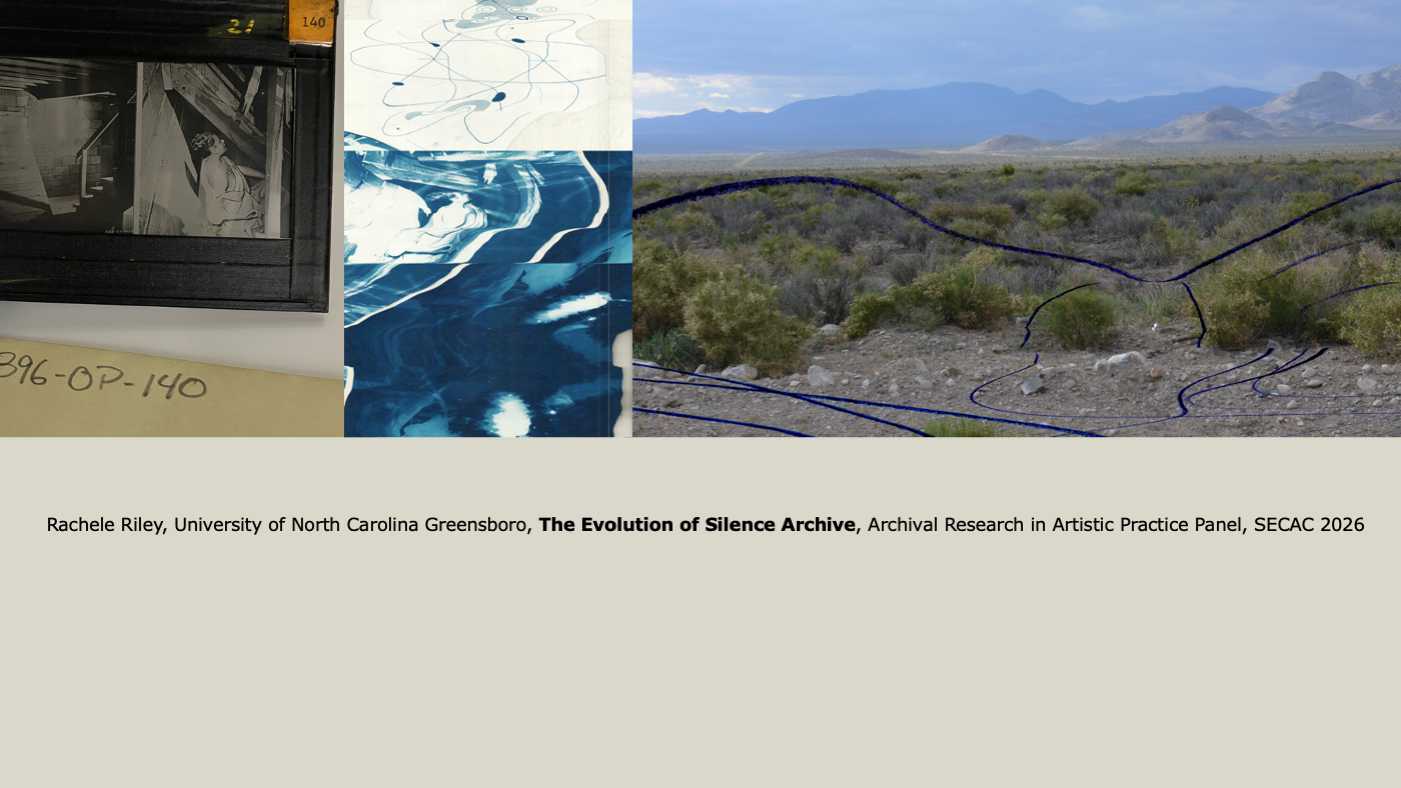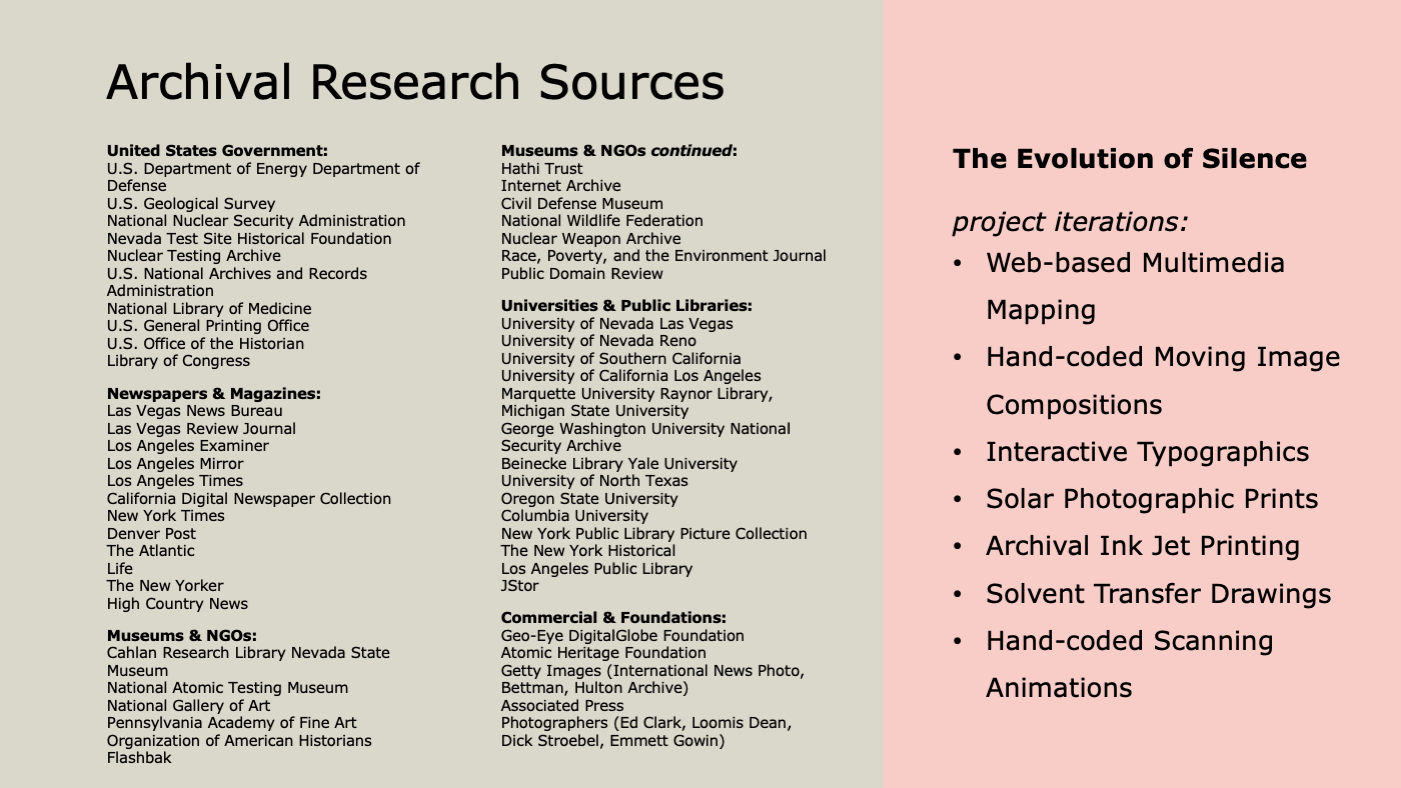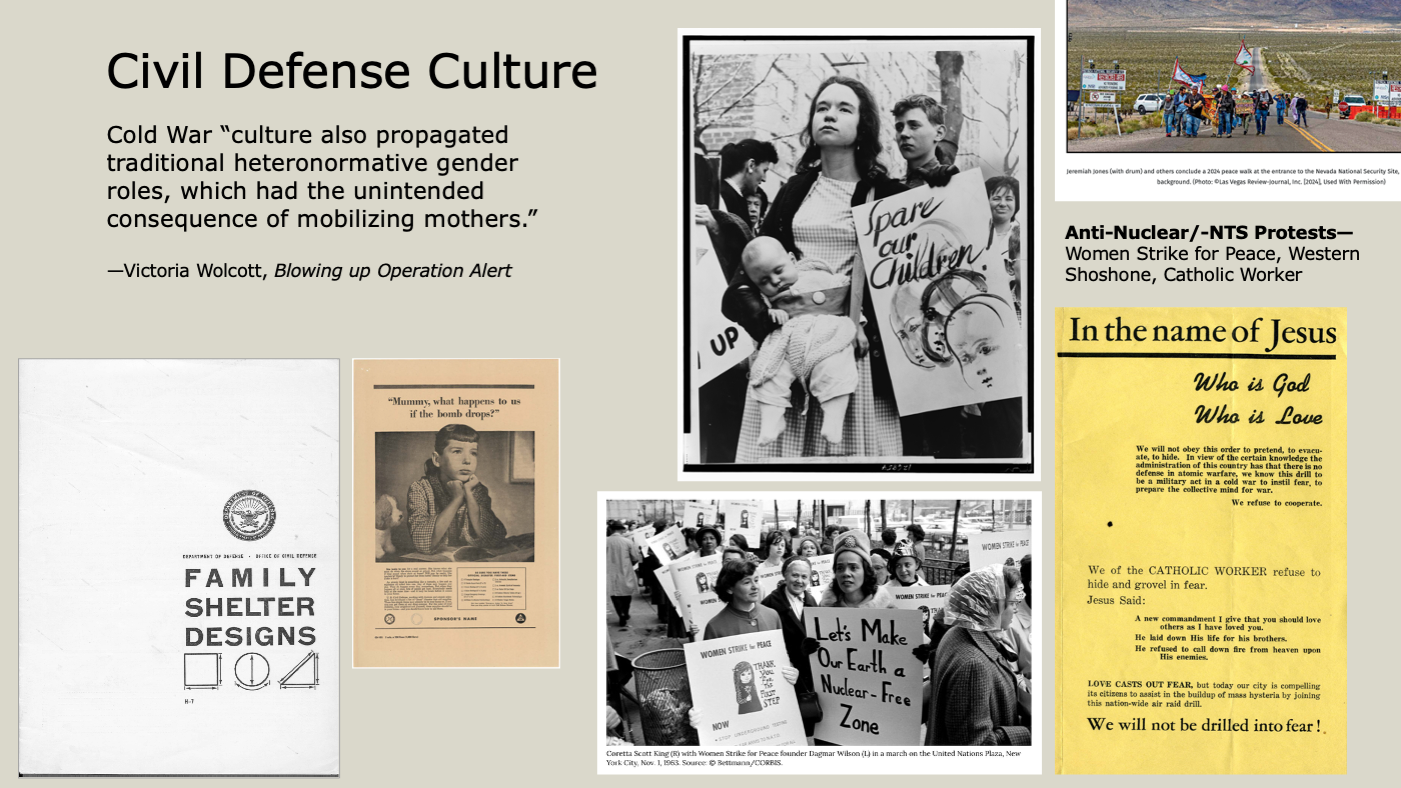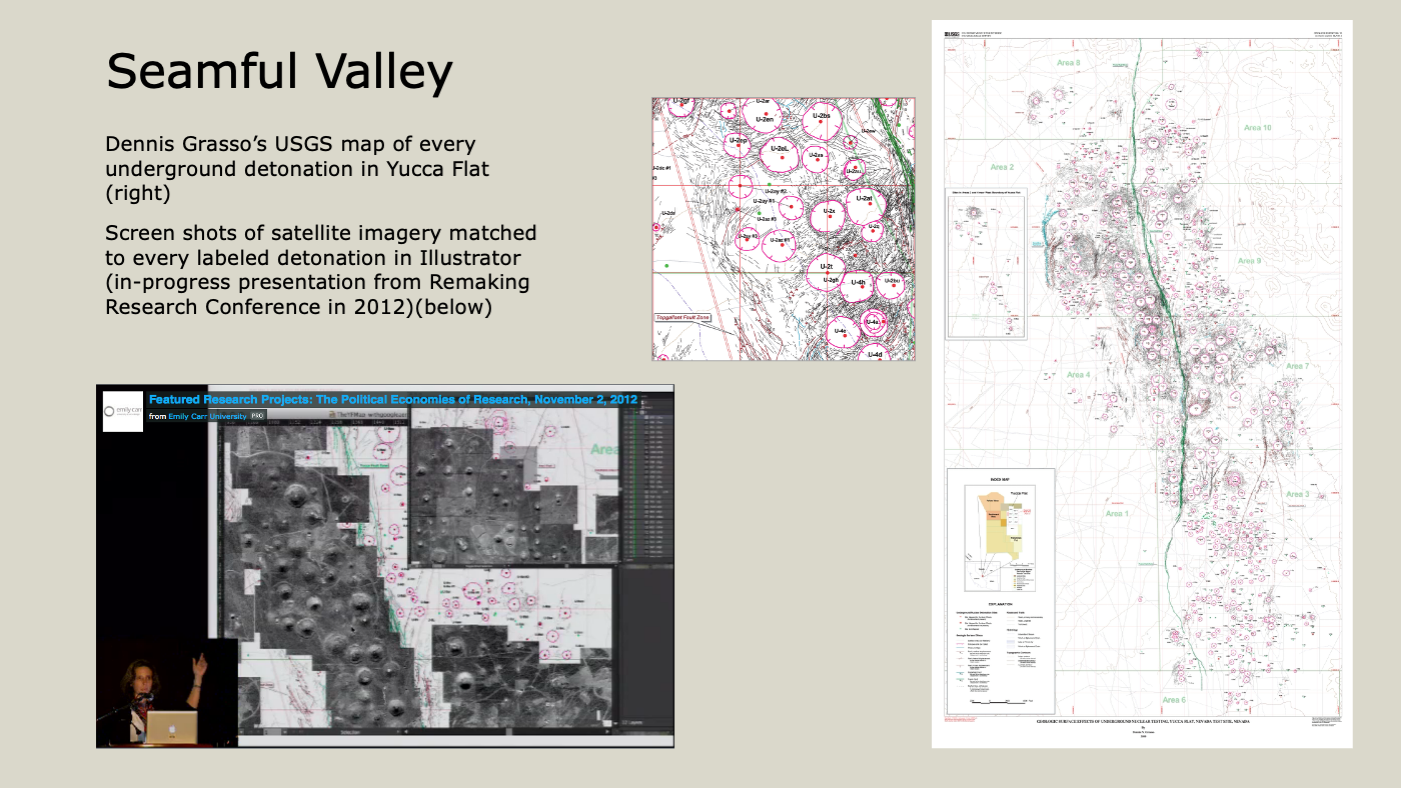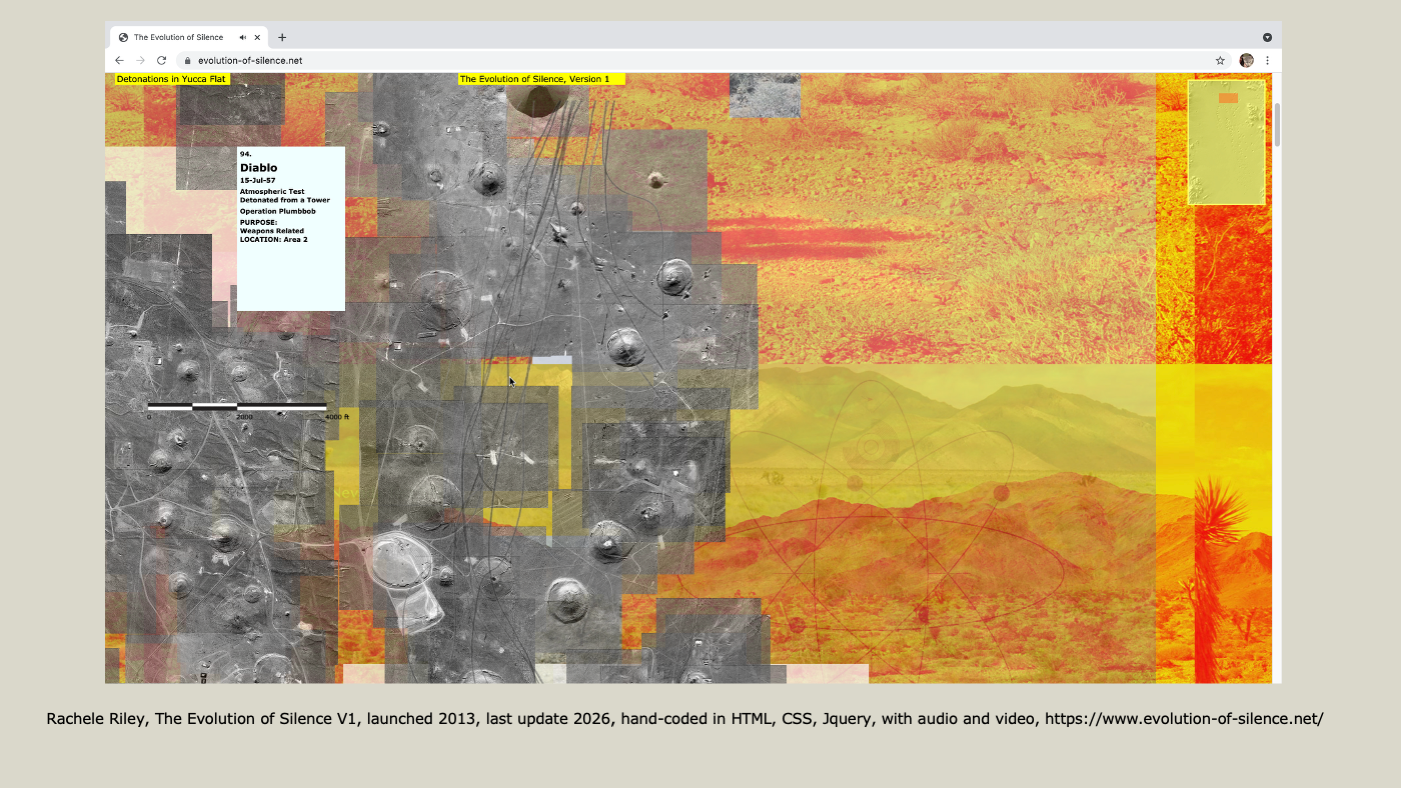
I presented on The Evolution of Silence and the role of archival research in my art practice at the Southeastern College Art Conference (SECAC) this past week. I spoke on the panel, Archival Research in Artistic Practice, which was chaired by Beauvais Lyons and Etai Rogers-Fett (both from University of Tennessee Knoxville). I shared my work on The Evolution of Silence project in a paper/talk which I wrote and hope to publish. Alongside my visuals, I rooted my presentation in the land and the rights of the Western Shoshone tribe, in the life and health of people of the NTS region, and in discussing the social hierarchies of power and conformity which are reflected in the archival images I am engaged with—in order to be clear about what is at stake when visualizing the histories and impacts of nuclear violence.
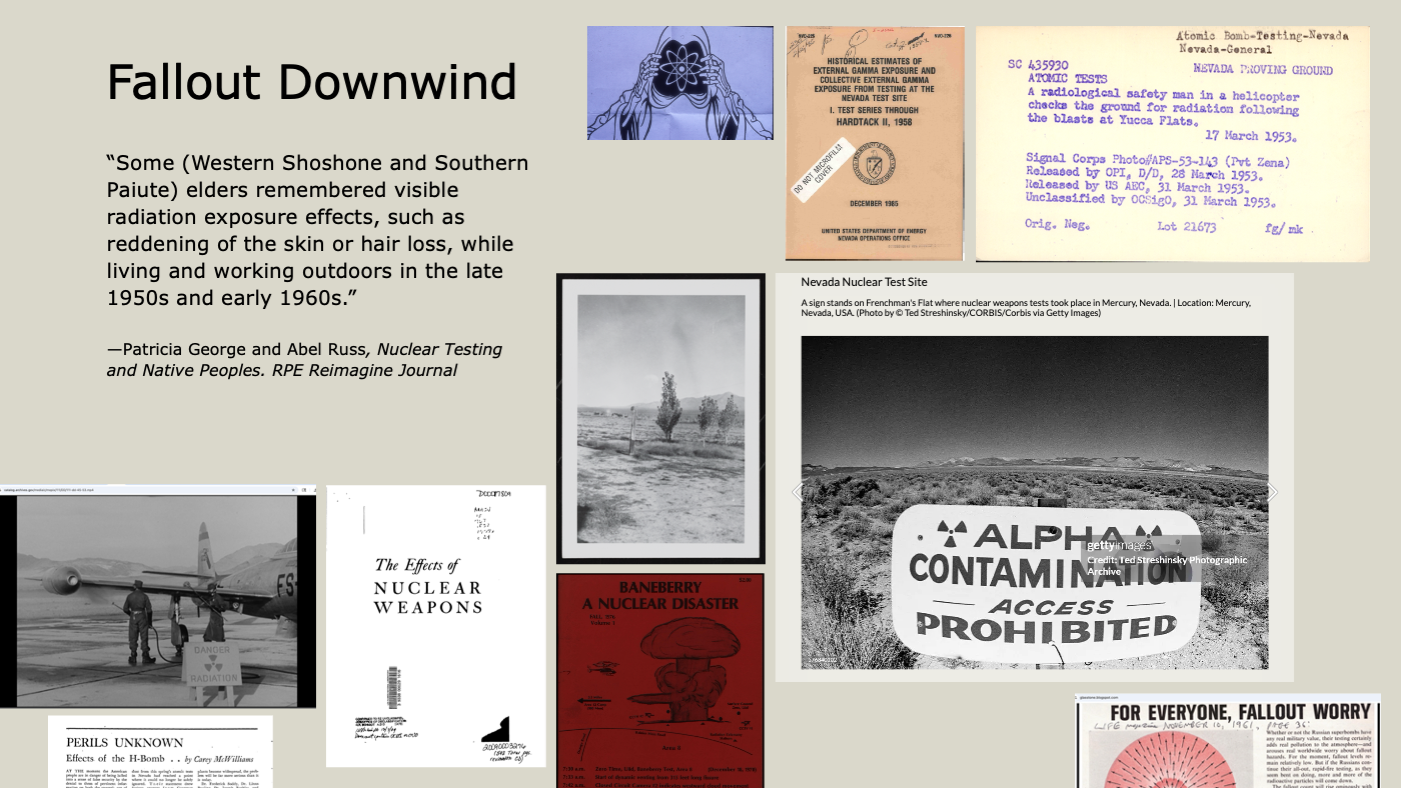
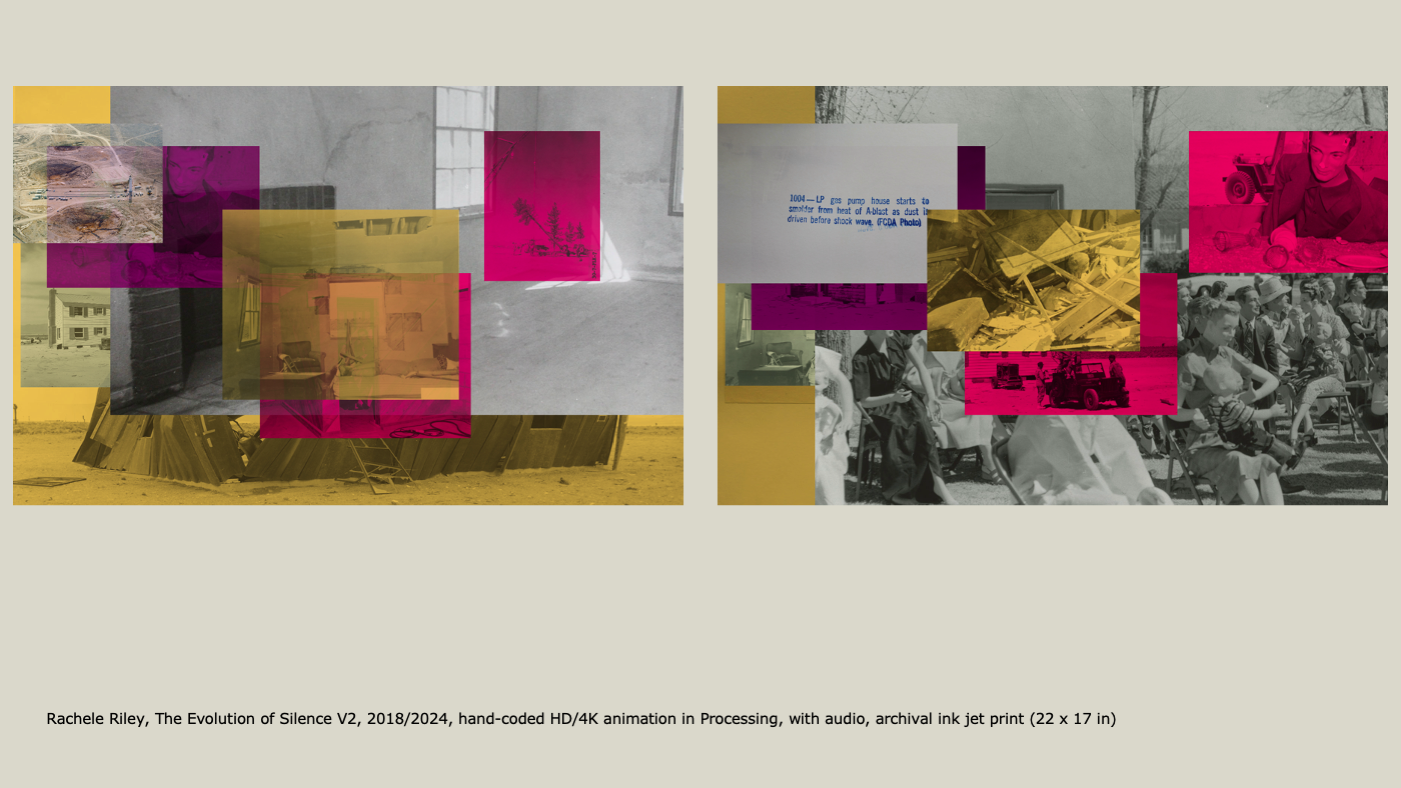
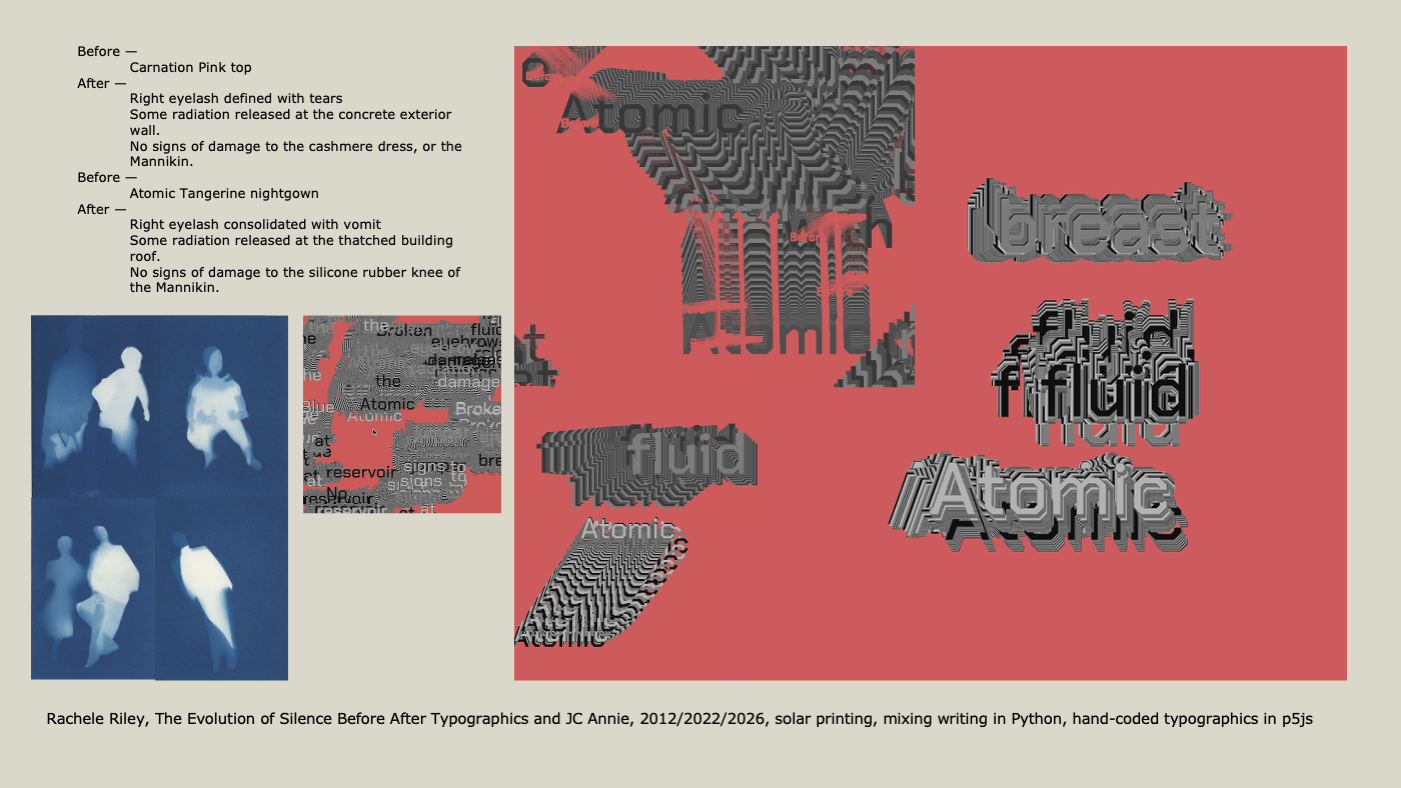
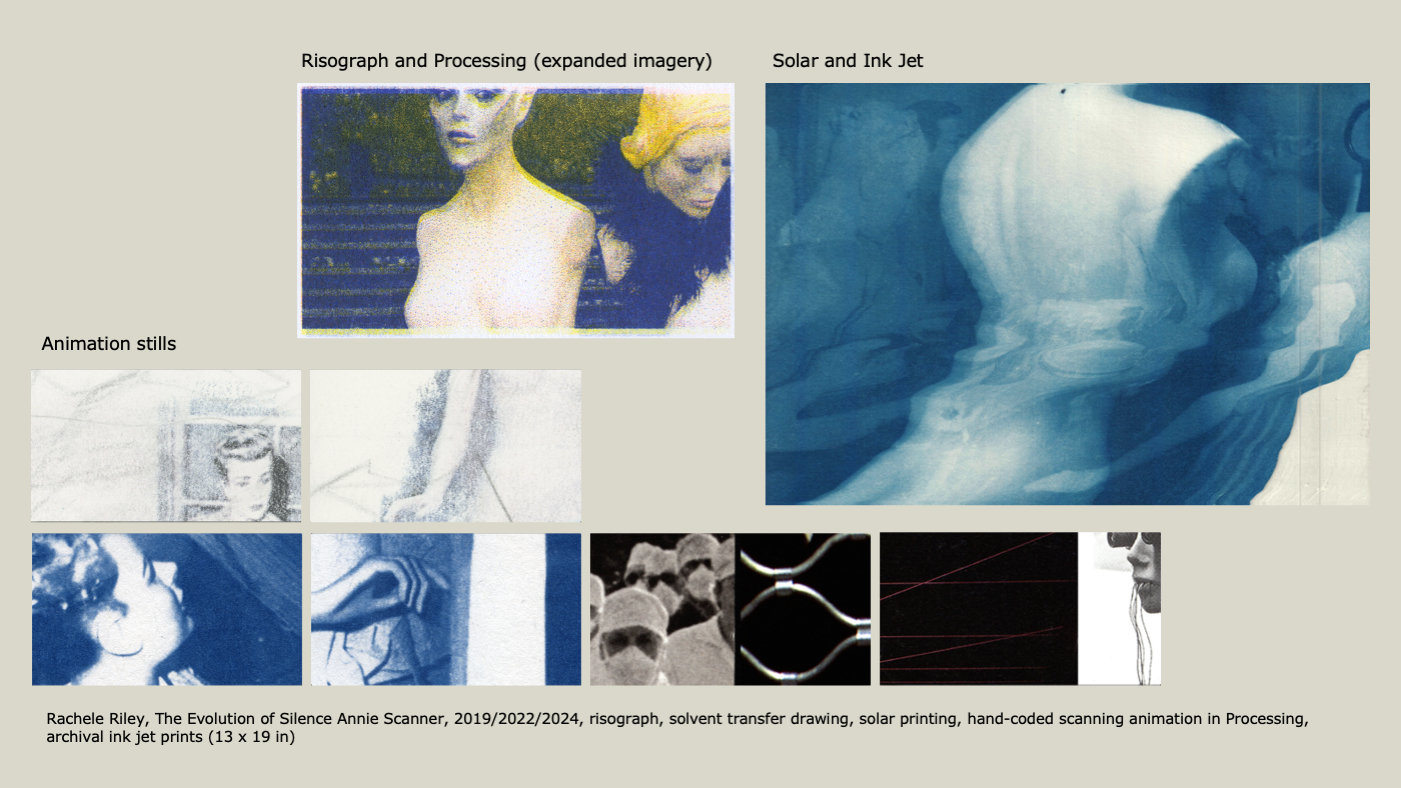
I shared my visual approach and experiments in “seamful” design—ways I reckon with the gaps in archives. I shared the thoughts of scholars whose ideas I work with, and the critical questions guiding my research and my art making. For example, who is seen in the images and preserved in archive systems; how do I bring forward a missing materiality and the bodily in representations; how do I acknowledge fragments of the archive and the archive’s violence, without recreating it; what subjects are emerging for further inquiry into peace, engagement, and imagination. I highlighted a number of photographs, cultural artifacts, and publications from the diverse archives. I spoke about the materials I have found, what I am still looking for, how I analyze these images and think about them critically, and how my research forms and is transformed in my multimedia art work.
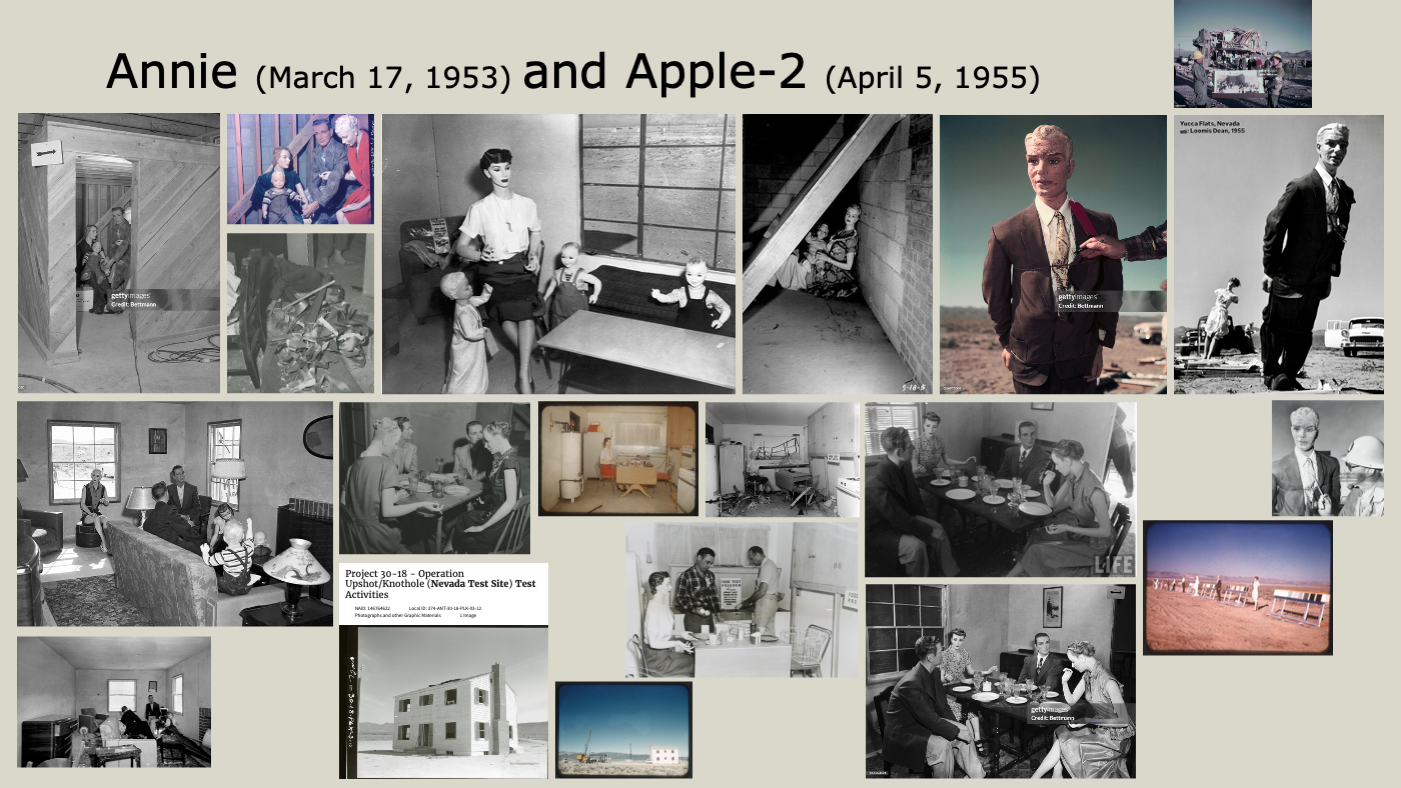
The discussion afterward raised an interesting question about whether there are unique skills which artists bring to archival research. As an artist, I can share that when I research photographs I am seeking more than the mere image representation but I also wish to reflect upon, analyze, document, smell, hold, and touch, and incorporate into my artwork the image’s material physicality and trace (paper, film, and different image versions). I am scanning images full frame and including all of the markings on the fronts and backs (stamps, writing, notes taped). I am especially interested in images that have been physically retouched (with pasted elements and over-drawings/paintings). I have noticed alternations on mannequin photographs (a current focal point of my research) of which I have never read a mention or an analysis—and I wonder if it is because I am looking at the images as an artist, closely and with an understanding of mark making and material qualities—that these interruptions stood out to me where there were not seen by others. I hope to be able to publish my paper soon and to continue to reflect on this question.
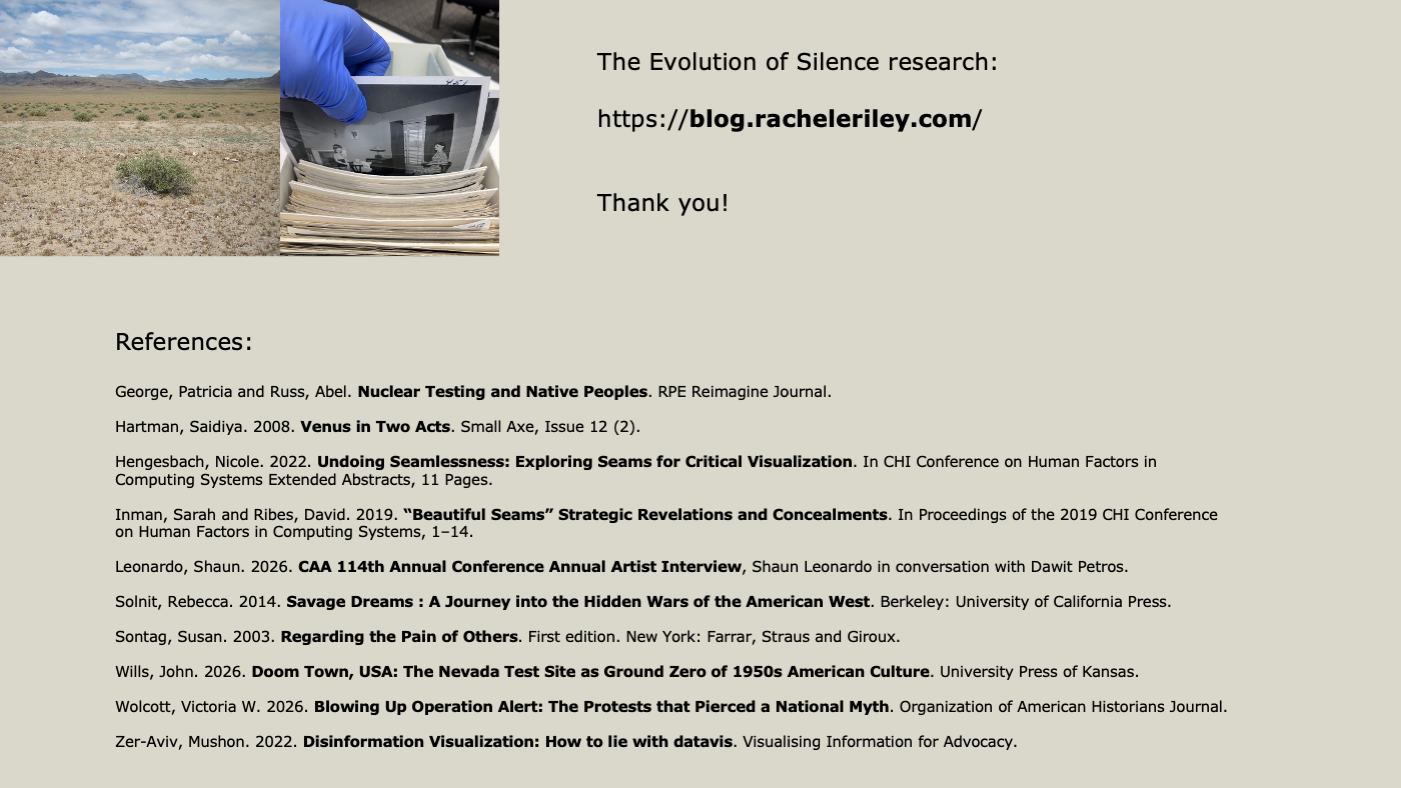
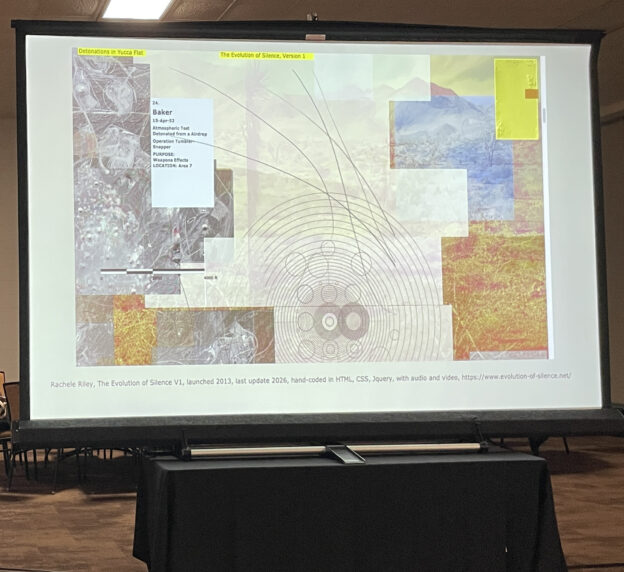
Selected slides from my visual presentation: